23 minutes, 48 seconds
-1 View 0 Comments 0 Likes 0 Reviews
Summary: Secure Transportation for Miami's Jewelry Businesses
High-value jewelry shipping involves coordinating packaging, collection, transportation, insurance, and delivery confirmation. Diamonds, loose gemstones, luxury watches, and finished jewelry may require specialized handling and may be subject to restrictions under standard courier policies. Businesses should verify item eligibility, coverage limits, declared values, security procedures, and claims requirements before dispatch. UNIVAL Logistics can be approached to discuss transportation requirements and determine whether an appropriate service is available.
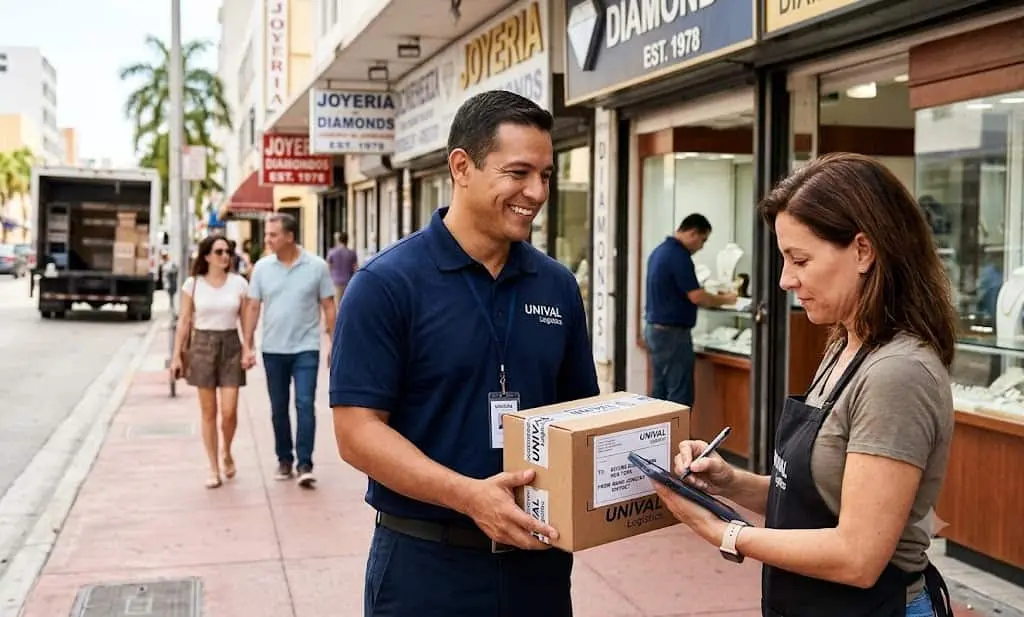
Miami serves a diverse commercial market that includes luxury retailers, independent jewelers, jewelry wholesalers, designers, and businesses trading in precious stones and finished jewelry. These organizations may need to move valuable items between showrooms, workshops, suppliers, customers, trade events, and other business locations.
However, the small size and high value of many jewelry shipments create particular security challenges. A single parcel can contain merchandise worth thousands or even substantially more, while a missing shipment may disrupt customer orders, inventory management, and business relationships.
Miami jewelry district shipping should therefore be planned around the actual value of the goods, the type of jewelry being transported, the destination, and the level of protection required. Ordinary courier services may not accept every jewelry category or provide suitable coverage for high-value items.
UNIVAL Logistics emphasizes the importance of verifying service capabilities, insurance arrangements, custody documentation, and delivery procedures before choosing a transportation solution. Businesses should obtain written confirmation of the protection available rather than assuming that a shipping label or declared value automatically guarantees reimbursement.
Verify item eligibility: Confirm that the selected service accepts diamonds, loose gemstones, fine jewelry, and the declared shipment value.
Review insurance carefully: Understand coverage limits, exclusions, deductibles, and claim notification deadlines.
Use appropriate packaging: Protect jewelry against movement, impact, moisture, and accidental exposure.
Maintain custody records: Document collection, shipment details, handovers, and final delivery.
Limit unnecessary disclosure: Restrict access to sensitive shipment information and avoid conspicuous packaging.
Choose a suitable provider: Evaluate relevant experience, security procedures, service availability, and contractual responsibilities.
Quick Answer: Miami jewelry district shipping involves transporting diamonds and fine jewelry through suitable shipping arrangements with verified item eligibility, appropriate insurance, secure packaging, documented custody transfers, and reliable delivery confirmation.
Jewelry differs from ordinary merchandise because its financial value may be high relative to its size and weight. Diamonds, precious stones, gold jewelry, and luxury watches can be difficult to replace quickly, and their loss may create significant financial consequences.
A small padded envelope or compact box may contain jewelry worth far more than its physical size suggests. This makes secure handling, restricted access, and appropriate transportation arrangements particularly important.
Businesses should avoid assuming that a standard parcel service can accommodate every item simply because the package is small. Carrier policies may impose restrictions on precious metals, gemstones, jewelry, watches, and other valuable goods.
Before booking, confirm that the carrier accepts the specific item category and declared value. If the shipment exceeds the service's standard limits, a specialized high-value transportation arrangement may be necessary.
Jewelry shipments can encounter several risks during transportation, including unauthorized access, misplaced parcels, incorrect delivery, packaging failures, and accidental damage.
A reliable process should address these risks at every stage, from inventory preparation and packaging to collection, transit, and recipient verification. Security depends on the combination of procedures rather than on a single protective feature.
For jewelers, a delayed or missing shipment may affect a scheduled sale, repair, customer presentation, or wholesale order. Repeated delivery problems can also damage customer confidence.
Consistent documentation, realistic delivery commitments, and suitable insurance arrangements help businesses manage these operational risks more effectively.
Proper preparation helps reduce avoidable damage and supports accountability if a shipment is lost or damaged.
Begin by creating an accurate inventory of the items being shipped. Depending on the shipment, relevant records may include purchase invoices, sales documentation, item descriptions, gemstone certificates, appraisal records, and photographs.
For high-value diamonds, maintain available grading or identification documentation where appropriate. Records should be stored securely and linked to the relevant shipment reference.
An accurate valuation is important because insurance terms may depend on the declared value and supporting evidence. Businesses should never assume that an appraisal, invoice, or certificate automatically establishes the amount payable under a policy.
Jewelry should be secured so that individual pieces cannot move excessively or damage one another during handling. Appropriate packaging may include protective pouches, jewelry boxes, cushioning, and a sturdy outer container selected for the item and shipping method.
For loose diamonds and gemstones, packaging should prevent loss and protect the contents from impact. The shipper must also follow any carrier or insurer requirements concerning sealed containers, tamper-evident materials, and outer packaging.
Avoid displaying jewelry branding, precious-stone descriptions, or obvious indicators of valuable contents on the exterior unless specifically required for compliant shipping documentation.
Confirm the recipient's name, business address, contact information, and delivery instructions before dispatch. Incorrect details can lead to failed delivery attempts, additional handling, or the shipment being delivered to the wrong location.
For valuable jewelry, consider whether the service supports signature confirmation or another appropriate recipient-verification procedure. Confirm what proof of delivery will be supplied.
Selecting a transportation provider requires more than comparing delivery prices or estimated arrival times. Jewelers should establish whether the service is suitable for their merchandise and business requirements.
Ask whether the provider has experience handling the particular type of shipment, including loose diamonds, finished jewelry, luxury watches, or precious-metal products.
Confirm the maximum accepted shipment value, packaging standards, collection procedures, delivery controls, and any restrictions on particular goods. A provider that handles ordinary commercial parcels may not be equipped or authorized to transport high-value jewelry.
Ask how the provider manages collection, shipment identification, access to packages, tracking, custody transfers, and unsuccessful deliveries.
Where appropriate, businesses should seek details about specialized handling, secure storage arrangements, and escalation procedures for suspected loss or theft. Do not assume that every provider offers armored transportation, dedicated couriers, or continuous monitoring; these capabilities must be verified individually.
Insurance is one of the most important considerations when transporting valuable jewelry. Standard carrier liability may be limited, and some policies exclude jewelry, loose gemstones, precious metals, or items exceeding specified values.
Before booking, confirm the insurer or responsible party, applicable coverage limits, exclusions, deductibles, declared-value requirements, and claim notification deadlines. Ask whether coverage applies throughout the entire transportation process or only during particular stages.
UNIVAL Logistics can be approached to discuss shipping requirements and determine whether a suitable service is available. Before handing over valuable merchandise, confirm the exact service scope, security measures, and insurance arrangements in writing.
Shipping insurance can help protect a business against specified financial losses, but the actual protection depends on the policy and circumstances of the incident.
Depending on the policy, eligible coverage may include loss, theft, or physical damage occurring during defined stages of transit. Certain policies may impose different conditions for jewelry, diamonds, watches, or other high-value goods.
Customers should verify whether the policy covers the full declared value, whether a deductible applies, and whether the claim payment is based on invoice value, replacement cost, an agreed valuation, or another method specified in the contract.
Insurance policies may exclude particular merchandise categories, inadequate packaging, unexplained shortages, unattended shipments, prohibited shipping methods, or losses that occur outside the defined coverage period.
A parcel's tracking status does not prove that its contents are insured. Similarly, entering a value into a booking form does not necessarily establish that the carrier or insurer has accepted that value for coverage.
Request written confirmation of the applicable conditions before dispatch.
If a shipment is lost or damaged, the claimant may need the shipping receipt, insurance confirmation, itemized inventory, proof of value, photographs, tracking records, and relevant delivery documentation.
Report the incident promptly and follow the applicable notification deadlines. Retain the packaging and damaged items when possible, and cooperate with any inspection requirements.
Jewelry businesses may transport merchandise between retail locations, workshops, wholesalers, trade events, and customers. Each situation can involve different handling and timing requirements.
Retailers and wholesalers should establish a consistent process for recording outgoing merchandise, verifying item quantities, confirming collection, and reconciling delivered goods.
For multi-item shipments, use itemized records that distinguish individual pieces and their corresponding values. This can make discrepancies easier to identify and investigate.
Repair shops and custom jewelers may handle customer-owned pieces that are difficult to value using an ordinary sales invoice. In these situations, document the item's condition, customer authorization, identifying characteristics, and available valuation records.
Confirm whether the shipping policy covers customer property, repair items, or goods held on behalf of third parties. Coverage for merchandise owned by the sender may differ from coverage for goods entrusted to a business.
Moving jewelry to an exhibition, appointment, or temporary retail location may require a different delivery schedule and recipient arrangement. Businesses should verify that the destination, dates, and purpose of the shipment are covered by the agreed service.
Where several parties handle a shipment, clear documentation of each transfer helps maintain accountability and reduces confusion about responsibility.
A chain of custody records how responsibility for a shipment passes between authorized parties. It is especially valuable when the contents have a high financial value.
At the point of dispatch, record the shipment reference, package details, collection date, and the person or organization accepting custody. Depending on the service, documentation may include sealed-container identifiers, collection receipts, and transfer confirmations.
During transportation, use the tracking and communication procedures provided by the courier. Restrict shipment information to authorized personnel and avoid distributing sensitive details unnecessarily.
At delivery, verify the recipient and retain the available proof of delivery. Reconcile the delivered items against the inventory records and report discrepancies promptly.
These procedures cannot eliminate every risk, but they can improve traceability and provide useful evidence if a claim or investigation becomes necessary.
The cost of transporting diamonds and fine jewelry depends on the declared value, service level, distance, packaging, security requirements, and insurance eligibility. Specialized high-value shipping can have different pricing and acceptance rules from ordinary parcel delivery.
There is no single verified rate that applies to every jewelry shipment in Miami. Businesses should request a tailored quotation and clarify which services are included.
Base transportation fee: The charge for collection and delivery, influenced by distance, package specifications, and the selected service.
Insurance or declared-value charge: Any applicable fee for eligible shipment protection, subject to policy limits and the provider's pricing method.
Specialized security and handling: Additional charges may apply for dedicated handling, secure storage, or other approved arrangements when available.
Packaging materials: Protective boxes, cushioning, tamper-evident materials, or specialized packaging may add to the total cost.
Express delivery or special scheduling: Time-sensitive collections, special delivery windows, or additional delivery attempts may incur extra charges.
The cost categories above are general budgeting considerations, not confirmed market prices or a formal quotation. Actual prices are baseline estimates only where estimates are provided and may vary with market fluctuations, supplier changes, shipment specifications, insurance terms, and variable logistics fees. Contact UNIVAL Logistics for the latest and most accurate prices and a quotation tailored to your requirements. Confirm whether the selected service accepts your jewelry category and whether transportation, security, and insurance charges are included.
One common mistake is choosing a courier based solely on its advertised delivery speed. Fast delivery does not necessarily mean the provider accepts high-value jewelry or offers appropriate insurance.
Another mistake is assuming that declared value guarantees full reimbursement. Coverage depends on the policy, accepted value, supporting documentation, and circumstances of the loss. Customers should verify these details before shipment.
Inadequate packaging can also create avoidable risks. Jewelry that moves freely inside a container may be damaged during handling, and noncompliant packaging may affect a claim. Follow the provider's packaging requirements and retain relevant photographs.
Businesses should also avoid including unnecessary details about valuable contents in external packaging or sharing collection information widely. Maintain confidentiality while ensuring that all required shipping and insurance documentation is accurate.
Finally, do not overlook the claims process. Missing a notification deadline or failing to retain proof of value may complicate a claim. Keep all shipment records in an accessible, secure location.
Businesses that ship valuable merchandise regularly should establish written procedures that employees can follow consistently.
Start by classifying shipment types and values, identifying restricted goods, and determining which shipments require specialized transportation or additional approval. Confirm the selected provider's acceptance criteria and coverage terms before preparing each parcel.
Next, standardize inventory documentation, packaging, authorization, collection records, and delivery reconciliation. Assign clear responsibilities to employees so that shipment preparation and final verification are not left to informal practices.
Review shipping performance periodically. Monitor delivery delays, damage reports, claims, service costs, and changes to insurance conditions. Adjust procedures when merchandise values, shipping volumes, or business requirements change.
UNIVAL Logistics can be approached to discuss logistics requirements and determine whether an appropriate transportation option is available. Businesses should verify the specific service capabilities, applicable insurance, and contractual responsibilities before making a booking.
Transporting diamonds and fine jewelry requires careful attention to security, packaging, documentation, and insurance. Because valuable pieces may be small but financially significant, businesses should evaluate each stage of transportation and choose a service that accepts the specific merchandise and provides clearly defined protections.
Miami jewelry district shipping should be planned around the actual shipment value, delivery requirements, and risk exposure. Accurate records, suitable packaging, controlled custody transfers, and prompt incident reporting can help reduce avoidable problems and support more reliable operations.
UNIVAL Logistics can help businesses discuss their transportation requirements and clarify available options, subject to confirmation of the specific service and coverage. Before dispatch, verify the provider's acceptance of the items, insurance terms, security procedures, and total costs.
Miami jewelry district shipping refers to the transportation of diamonds, fine jewelry, precious stones, watches, and related merchandise between businesses, suppliers, customers, and other destinations in or from Miami. Suitable arrangements depend on the item category, value, security requirements, and delivery needs.
Use a shipping service that explicitly accepts diamonds and the declared shipment value. Follow the required packaging procedures, maintain accurate item and valuation records, verify insurance eligibility, and use appropriate tracking and delivery confirmation.
Not necessarily. Some standard courier policies restrict or exclude jewelry, loose gemstones, precious metals, and other high-value goods. Confirm the applicable coverage and exclusions in writing before dispatch.
Secure each item in suitable protective packaging, prevent excessive movement, use a sturdy outer container, and follow the courier's packaging requirements. Retain photographs and shipment documentation where appropriate.
Costs depend on shipment value, distance, service level, insurance eligibility, packaging, and security requirements. Specialized handling may incur additional charges. Request a tailored quotation from UNIVAL Logistics and verify the total price and included services.
No. Declared value is the amount stated for a shipment under the applicable shipping arrangement. It does not automatically guarantee insurance coverage or full reimbursement. Confirm whether an insurance policy applies and how eligible claims are calculated.
Useful records may include invoices, appraisals, gemstone certificates, itemized inventories, photographs, shipping receipts, insurance confirmations, and collection documentation. The necessary evidence depends on the merchandise and the applicable policy.
Businesses can use suitable packaging, restrict access to shipment information, choose an appropriate provider, document custody transfers, verify recipients, and reconcile delivered merchandise promptly. The exact security arrangements should reflect the shipment's value and risk profile.
Coverage varies. Some policies may impose restrictions on customer property, repair items, consignment merchandise, or goods held on behalf of others. Confirm eligibility and valuation requirements before arranging transportation.
You can contact UNIVAL Logistics to discuss your shipping requirements and determine whether a suitable service is available. Before booking, confirm that the provider accepts the specific jewelry category and declared value and clarify the transportation arrangements, insurance terms, security procedures, and total costs.

Choose a test user to login.







Share this page with your family and friends.